FREE PHONE CONSULTATION

Licensed and Insured

WESTCHESTER COUNTY

PUTNAM & DUTCHESS COUNTY

Licensed and Insured

Westchester Wildlife LLC is not a licensed wildlife rehabber and cannot help with wildlife rescue. 

How to Tell If Bats Are Living in Your Attic

How to tell if bats are in your attic- Westchester Wildlife Removal

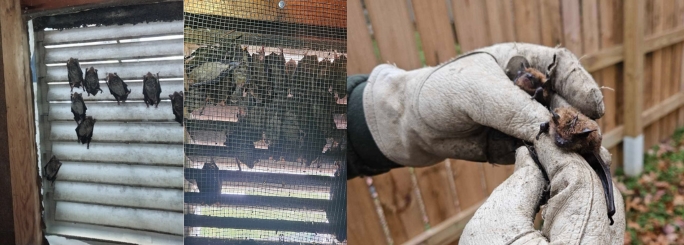
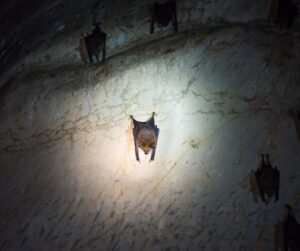
Bats are quiet during the day, active at night, and can fit through surprisingly small openings along rooflines. If you’ve seen them flying close to your roof every night or if you’ve heard chirping and scratching overhead you might be wondering if they’ve moved in.

This guide explains the most common signs of bats in an attic, where they typically get in, why you shouldn’t remove them yourself, and when it’s time to call a professional. If you suspect bats in your attic, Westchester Wildlife Removal provides humane bat removal and exclusion services throughout Westchester County, NY.

Signs of Bats in Your Attic

If you’re trying to figure out whether bats have actually moved into your attic, there are a few things to look for. If you’ve noticed one or more of the signs below, there’s a good chance bats are roosting inside.

You See Bats Flying Around Your Roof at Dusk

Seeing a bat fly through your yard at dusk isn’t usually a reason to worry. Bats are naturally active at night and often feed anywhere insects are plentiful.

What we’d pay attention to is a pattern. If you’re seeing bats around the same area of your roof almost every evening, especially if they seem to disappear behind the fascia, into a roof vent, or under the eaves, there’s a good chance they’re entering and leaving your attic.

A good way to check is to spend 10 or 15 minutes outside around sunset for a few evenings. If you consistently see bats coming from or returning to the same spot on your home, it’s worth scheduling a professional inspection.

You Hear Light Scratching or Chirping

The type of noise you’re hearing can tell you a lot about what animal you’re dealing with.

Bats usually don’t make loud noises the way raccoons do. If you’re hearing light scratching, faint rustling, or high-pitched chirping coming from the attic it’s probably bats. Because bats sleep during the day and are active at dusk, you’ll often hear those sounds for a short period around sunset as they leave to feed and again just before sunrise when they return.

If you’re hearing scratching or chirping in the middle of the day, or loud running and thumping all night, you’re more likely dealing with squirrels, raccoons, or another animal instead.

If the sounds line up with bat activity around your roof at dusk, that’s a strong indication bats are in your attic.

You Find Bat Guano (Droppings)

Guano is commonly found on attic insulation directly below a roost, beneath roof vents or gaps along the roofline, on top of soffits, or on the ground below the bats’ entry point. If you’re finding new droppings in the same area every day, that’s a strong sign the bats are actively using that opening.

If you think you’ve found bat guano, don’t sweep it up or vacuum it. Disturbing dried guano can send fungal spores into the air that can cause a lung infection called Histoplasmosis. Before cleaning anything, it’s important to confirm the bats have been safely and legally excluded from the attic. Otherwise, contamination will simply continue to build up.

Your Attic Has a Strong Musty Odor

A bat colony can create a strong musty, ammonia-like smell that gets worse over time. The odor comes from a buildup of bat guano and urine in the attic and is often more noticeable during warm weather. If your attic has a persistent smell that you can’t explain, it’s worth having it inspected for bats or other wildlife.

Where Do Bats Get Into an Attic?

Bats don’t need a large hole to get into your attic. In fact, some species can fit through an opening that’s only 3/8 of an inch wide.

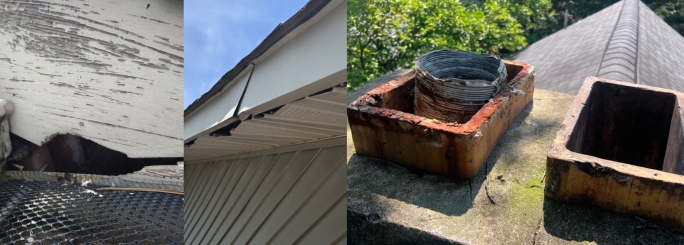
The most common places we find bats entering homes are along the roofline. We often find gaps where soffits meet the roof, loose fascia boards, roof and gable vents, ridge vents, chimney flashing, or small openings where different building materials meet. These gaps are easy to miss from the ground but are large enough for bats to squeeze through.

If you think you have bats, one of the easiest things you can do is watch your home around sunset. If you see bats consistently entering or exiting the same spot, you’ve likely found the primary entry point. Keep in mind, though, there are often multiple openings around the home. During a professional bat inspection, we check the entire exterior to locate every active and potential entry point before recommending an exclusion plan.

When Are Bats Most Active in New York?

Bats are most active in New York from spring through early fall, typically March through October. During this time, they’re feeding, raising their young, and looking for safe places to roost. Warm, protected attics are a common choice.

From May through early August, many bat species are raising flightless pups. Because the young bats can’t leave the attic on their own, bat exclusions are typically delayed until they’re able to fly. Once the pups are flying, usually by late summer, a professional can safely and humanely exclude the colony and seal the home’s entry points.

Why You Shouldn't Try to Remove Bats Yourself

Removing bats from an attic is more complicated than simply sealing up the hole they’re using. If the exclusion isn’t done correctly, you can trap bats inside your attic or living spaces, creating a much bigger problem.

There are also important health risks to consider. If you disturb dried guano then inhale the airborne fungal spores you could contract a serious respiratory infection called Histoplasmosis. Bats are also one of the most common species associated with rabies in the United States. If you wake up and find a bat in your bedroom or have any direct contact with one, you should avoid handling it and contact your local health department or a wildlife professional right away so the bat can be safely captured and submitted for rabies testing.

It’s also important to know that bats are protected by state and federal laws, and there are specific regulations that govern when and how they can be removed. In New York, bat exclusions generally cannot be performed during maternity season because flightless pups could be trapped inside the attic. A licensed wildlife professional understands these regulations and uses humane exclusion methods that allow bats to leave the home without harming them.

Professional Bat Removal and Exclusion in Westchester County, NY

Westchester Wildlife Removal provides humane bat removal and exclusion services throughout Westchester County, NY. Our team will inspect your home, identify every active entry point, safely exclude the bats, and seal those openings to help prevent them from returning. We also offer attic cleanup and restoration services for bat guano and contaminated attic insulation.

If you’ve noticed bats flying around your roof, heard chirping or scratching in the attic, or found signs of bat activity around your home, contact Westchester Wildlife Removal to schedule a professional bat inspection.

More Blogs From Westchester Wildlife Removal

How to Tell If Bats Are Living in Your Attic

This guide explains the most common signs of bats in an attic, where they typically get in, why you shouldn’t remove them yourself, and when it’s time to call a professional. If you suspect bats in your attic, Westchester Wildlife Removal provides humane bat removal and exclusion services.

Read More »