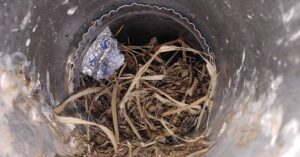
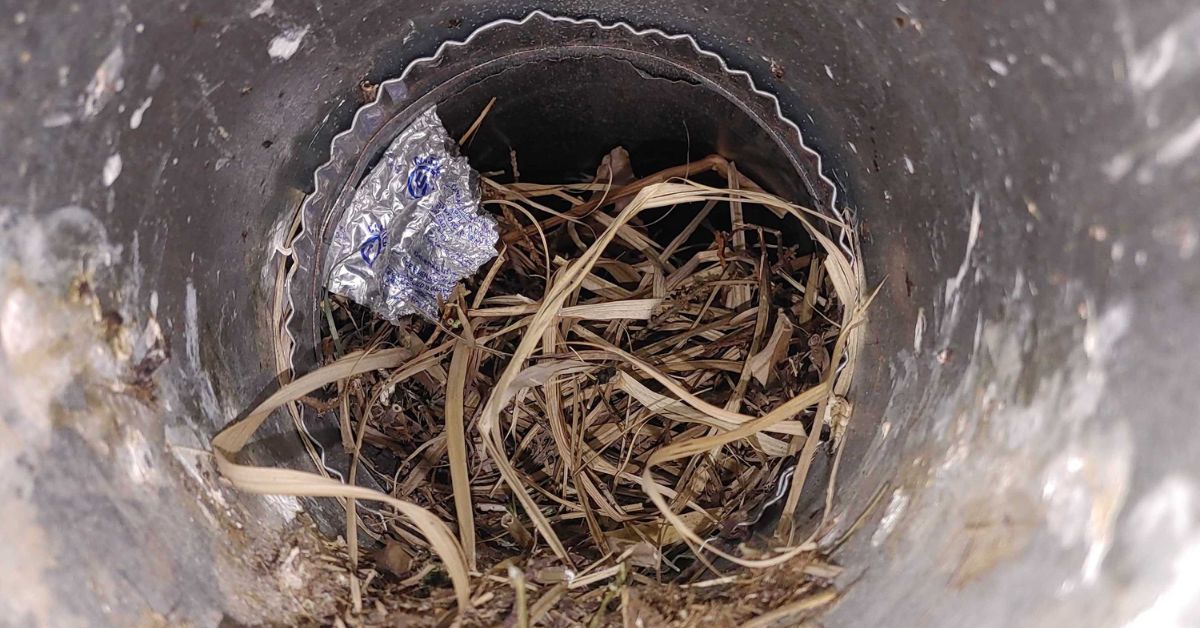
Dryer Not Working? A Bird Nest Could Be the Reason
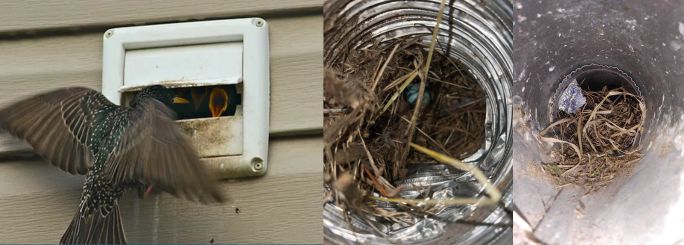
If your dryer suddenly isn’t working like it used to, it’s easy to assume the appliance is the problem. In a lot of cases, it’s not.
Blocked airflow is one of the most common reasons dryers stop performing properly, and one of the most overlooked causes of that blockage is a bird nest inside the exterior vent.
This guide walks through what to look for, why birds choose dryer vents, and what to do if they’re nesting inside. It also covers why removal needs to be handled carefully and how to keep it from happening again.
Signs Your Dryer Isn’t Working Like It Should
Dryer vent blockages usually show up as performance issues before anything else. The machine is still running, but the airflow isn’t there.
Here are the most common signs:
- Clothes take multiple cycles to dry
If a normal load suddenly takes twice as long, airflow is likely restricted. - Dryer feels hotter than usual
Heat is building up inside the system because it can’t vent properly. - Burning or musty smell
Trapped lint and moisture can create odors that weren’t there before. - Lint buildup around the dryer or vent area
When air can’t move freely, lint doesn’t get carried out the way it should. - Weak or no airflow outside
If you check the exterior vent while the dryer is running and feel little to no air coming out, there’s likely a blockage. - Dryer shuts off early or overheats
Many dryers will shut down as a safety measure when airflow is restricted.
Most of these signs point to the same issue. Air isn’t moving through the vent line the way it should. One of the more common reasons for that is material packed inside the vent.
Check Outside. Your Dryer Vent Could Be Blocked
Most homeowners check the lint trap and maybe the hose behind the dryer. The exterior vent usually doesn’t come to mind, especially if you haven’t had this issue before.
Your dryer pushes hot, moist air out of the home through a vent on the outside wall, usually a few feet off the ground. If that opening is blocked, the air has nowhere to go. Take a look at the exhaust vent while the dryer is running:
- You should feel a steady flow of warm air coming out
- The flap or cover should open easily from the airflow
If there’s little to no airflow, or the vent cover isn’t moving, something is blocking the line.
Why a Blocked Dryer Vent Is a Serious Problem
A blocked dryer vent isn’t just an inconvenience. It creates real risks for your home.
When airflow is restricted, heat and moisture have nowhere to go. That buildup affects both the dryer and the vent line.
Here’s what that can lead to:
- Fire risk from lint buildup
Lint is highly flammable. When it gets trapped in a hot, restricted vent line, the risk of a dryer fire goes up significantly. - Moisture buildup inside the home
If air can’t vent outside, that moisture can stay in the line or leak back into the home, leading to mold and mildew. - Damage to the dryer
The appliance has to work harder to push air through a blockage. Over time, that added strain can lead to breakdowns or a shorter lifespan. - Higher energy bills
Longer drying times mean more energy use for the same load of laundry. - Hidden blockage getting worse over time
Nesting material and lint tend to pack together. What starts as a partial blockage can quickly turn into a full obstruction.
A lot of homeowners focus on the dryer itself when something feels off. In many cases, the bigger issue is what’s happening inside the vent line.
Signs There’s a Bird Nest in Your Dryer Vent
A clogged vent isn’t always just lint. When birds get into the vent, the signs are usually a little different if you know what to look for.
Here are the most common signs birds are nesting in your dryer vent:
- Chirping or scratching sounds
If you hear noise coming from the vent, especially during the day, there’s a good chance birds are actively nesting inside. - Nesting material sticking out of the vent
Twigs, grass, or debris visible at the opening is a clear sign something has built a nest right inside. - Little to no airflow outside
A tightly packed nest can block airflow almost completely. - Frequent dryer performance issues
If your dryer struggles even after cleaning the lint trap, the blockage may be deeper in the line. - Bird activity around the vent
Seeing birds repeatedly flying to and from the same spot on your home is one of the easiest ways to spot the issue early. - Debris or lint buildup around the vent opening
Birds often pull lint out of the vent to build their nest, which can leave a mess around the exterior.
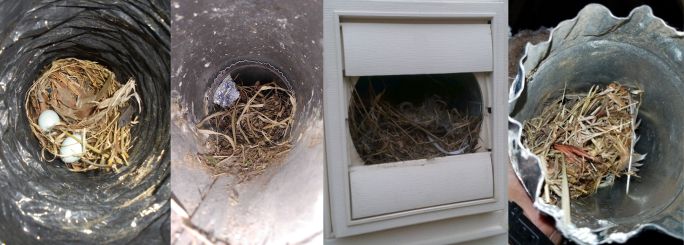
In most cases, the nest isn’t just sitting at the opening. It’s packed inside the vent line, which is why the problem tends to get worse the longer it’s left alone.
Why You Shouldn’t Try to Remove a Bird Nest Yourself
It might seem like a simple fix. Pull the nest out and clear the vent. In reality, it’s usually more involved than that.
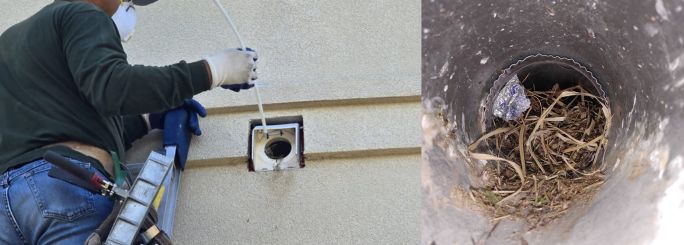
Bird nests in dryer vents are often packed deep inside the line, not just sitting at the opening. Trying to remove it from the outside rarely clears the full blockage and can make things worse.
Here’s what to consider:
- You could trap or separate baby birds
Many nests contain eggs or hatchlings, especially in spring and early summer. Removing part of the nest can leave them stuck inside the vent. - Some birds are protected
Certain species are protected under federal law, and disturbing an active nest can create legal issues depending on the situation. - Health risks from droppings and parasites
Bird nests can carry bacteria, mites, and other contaminants. Reaching into a vent without proper protection isn’t worth the exposure. - The blockage is usually deeper than it looks
Even if you pull some material out, there’s often more packed further inside the vent line that still needs to be cleared. - You can damage the vent system
Dryer vents aren’t built to handle tools being pushed through them. It’s easy to puncture or disconnect sections of the line.
Proper removal means fully clearing the vent, making sure no animals are left inside, and restoring airflow safely. That’s where professional equipment and experience make a difference.
How Professional Bird Removal Works
When birds nest in a dryer vent, the priority isn’t just clearing the blockage. It’s making sure the birds are handled properly and nothing is left behind.
Here’s how we approach it:
- Confirming active nesting
We check for bird activity, listen for movement, and determine if there are eggs or hatchlings inside the vent. - Understanding species and legal protection
Many bird species are protected, especially during nesting season. In those cases, removal isn’t always allowed right away. The approach has to follow regulations, which often means waiting until the birds have left the nest naturally or using approved methods that don’t harm them. - Humane removal of adult birds (when allowed)
If removal is permitted, adult birds are safely guided out without harm. The goal is to get them out without causing panic or injury. - Handling nests with babies the right way
If there are hatchlings, the process changes. In some cases, a monitored approach is used so the adult birds can continue feeding them until they’re ready to leave. This avoids trapping or killing them inside the vent. - Removing all nesting material once it’s safe
After the birds are no longer active in the vent, the entire nest is removed from the line, not just what’s visible at the opening. - Making sure nothing is left inside
We double check the vent to ensure no birds, eggs, or debris remain before sealing it up.
Bird removal isn’t just about getting them out quickly. If it’s done wrong, you can end up with trapped animals, strong odors, or the same issue again within weeks. Proper handling protects both the home and the wildlife while keeping everything within legal guidelines.
Dryer Vent Wildlife Exclusion for Long-Term Protection
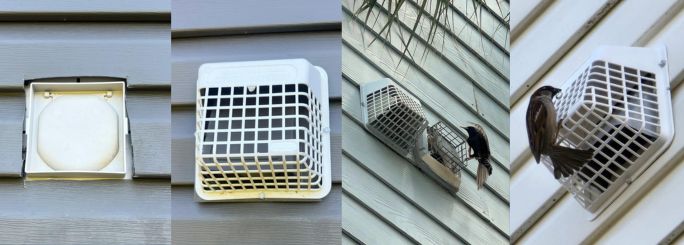
Once birds have nested in a dryer vent, there’s a high chance it will happen again if nothing changes. The vent is still an easy, sheltered opening, and birds will keep coming back to it. The most effective solution is installing a dryer vent bird guard. This is a cover designed to block birds from entering while still allowing proper airflow from the dryer.
After a nest is removed, wildlife exclusion is what actually solves the problem long-term. If you don’t, the vent is still wide open, and it’s pretty common to see the same issue again not long after.
This is also something that can be done proactively. Even if you haven’t had an issue yet, adding a properly installed guard can prevent birds from ever getting into the vent in the first place.
Dryer Vent Bird Nest Removal in Westchester County, NY
Birds nesting in dryer vents is something we see all the time across Westchester County, especially in areas like White Plains, Yonkers, New Rochelle, and surrounding towns. Most homeowners don’t realize what’s going on until the dryer starts acting up.
At Westchester Wildlife Removal, we handle these situations the right way from start to finish.
That means:
- Identifying the species and whether the nest is active
- Following proper guidelines if the birds are protected or nesting with babies
- Removing birds and nesting material safely and completely
- Clearing the entire vent line so airflow is fully restored
- Installing a proper bird guard to keep it from happening again
The goal isn’t just to get the birds out. It’s to fix the problem so your dryer works properly again and you don’t end up dealing with the same issue a few weeks later.
If your dryer isn’t performing like it should and you suspect something is blocking the vent, it’s worth having it checked. These problems tend to get worse the longer they’re left alone.
Schedule an Inspection Before It Turns Into a Bigger Problem
If your dryer isn’t working like it should and you’re seeing signs of bird activity, it’s worth having it checked before the blockage gets worse.
Westchester Wildlife Removal provides professional bird nest removal from dryer vents throughout Westchester County.
Call 914-760-5713 today or fill out our contact form to schedule a free bird removal inspection.
More Blogs From Westchester Wildlife Removal

Dryer Not Working? A Bird Nest Could Be the Reason
Dryer Not Working? A Bird Nest Could Be the Reason If your dryer suddenly isn’t working like it used to, it’s easy to assume the
Why Spring Is the Worst Time to Ignore an Animal In Your Attic
Mating season is the worst time to ignore an animal in your attic. If you are in the NY and CT area, schedule a free inspection with Westchester Wildlife.
Winter Mice Prevention: 5 Simple Steps That Work
Winter Mice Prevention: 5 Simple Steps That Work When winter arrives in Westchester County, mice begin searching for warm, sheltered places to spend the colder

Are Birds in the Attic Dangerous?
Are Birds in the Attic Dangerous? Birds in your attic or vents might seem like a small annoyance at first, but what starts as a

Signs of a Raccoon Problem vs a Squirrel Problem
Signs of a Raccoon Problem vs a Squirrel Problem It’s easy to mistake a raccoon for a squirrel in your attic – to the untrained

Why Fall Is the Peak Season for Wildlife Infestations in Westchester Homes
Why Fall Is the Peak Season for Wildlife Infestations in Westchester Homes When the cooler nights and shorter days of Autumn arrive, nuisance wildlife like